I've moved to a new blog: http://peripheralscrutiny.blogspot.com/
The blog focuses on not just wine, but also other areas I'm interested in. My primary goal is to explore "ways of knowing" in a more reflective, rigorous mode. My latest post is a casual statistical romp through my CellarTracker scores over the past three years: http://peripheralscrutiny.blogspot.com/2011/03/3-years-of-wine-tasting-numbers.html
Hope to see you over there!
... Read more.
Thursday, March 10, 2011
New Blog!

Saturday, September 26, 2009
1989 Brisebarre Vouvray Moelleux "Grande Reserve"

The recent film Bottle Shock, starring Chris Pine and Alan Rickman, reminded us of the 1976 Paris Tasting, where Napa first reached international acclaim. A little over 30 years ago, no one in Europe knew or cared about Napa wines. But for the last millennium, the wines of the Loire Valley have been known throughout Europe.
Within the valley, the Vouvray appellation has championed the Chenin Blanc grape, producing champagne-style sparkling wine, crisp dry whites, and ageworthy wines of varying sweetness. Occasionally a crop is afflicted with Botrytis cinerea, also known as pourriture noble ("noble rot"), a fungus that perforates the skins, shriveling the grapes and concentrating flavors, acids, and sugars. The greatest dessert wines are made from botrytis-afflicted grapes - Trockenbeerenauslese wines from Germany, Sauternes in Bordeaux, Tokaji from Hungary. However in Vouvray, Botrytis is rare. Only four vintages in the last century saw a significant natural presence of noble rot: 1945, 1955, 1969, and the birth-year of this wine, 1989.
Older wines are always a gamble. I've had at least as many flawed bottles as intact ones. Even if the wine isn't technically flawed, it is often tired and worn-out. It is a rare wine with enough fruit and structure to last for 20 years, much less improve. They say that for older vintages, "there are no great wines, only great bottles." This was one.
1989 Brisebarre Vouvray Moelleux "Grande Reserve"
Brilliant gold in the glass with a touch of green, this wine had a captivating nose of pear, honey, grape, and apple. Secondary flavors included saffron, candle-wax, flowers, and wet leaves. In the mouth the flavors swirled and blended. Medium bodied, it carried its sweetness effortlessly, with a touch of grapefruit bitterness and crystalline acidity. New, surprising flavors appeared far into the finish. This wine has it all: sweetness, acidity, flavors, finish, intrigue, surprise, and mouthwatering aromatic complexity. Amazingly, all of this is packed into a 12.5% medium bodied moelleux! Superb.
Score: 93 (I've only scored three other wines this high, out of nearly 700 tasting notes).
Temperature: Serve slightly cool (~65F), but not cold.
How much?: ~$35.
... Read more.
Saturday, September 19, 2009
Changing Hats
I recently joined CoolVines, a 2-year old specialty wine store with branches in Westfield, and Princeton, NJ. My official job description is business development and operations research, but in a small company you have to wear many hats. Besides data-crunching and strategy planning, I've manned the counter, stocked shelves, and helped with tasting/selection. In the process, I got up close and personal with some of the most intractable problems in wine retail.
Our store manager said it right: "Retail is DETAIL. It's simple, but not easy." It's a Jekyll-and-Hyde cycle: When a customer comes in, dig up and awaken your inner wine lover. Every time a customer leaves, turn into an OCD psychopath.
Another dichotomy is that of a wine lover/professional. Ever since Lord Parker rose to prominence on a Nader-esque crusade against conflict-of-interest, amateur wine lovers have been wary of professionals. And rightly so. No other industry profits from as much bullshit as the wine industry does. To borrow a term from Scott Adams, the wine business is a "confusopoly" - making money from people's confusion.
But hopefully this will change. With the proliferation of superb blogs like WLTV and Vinography, consumers are better informed. Parker and Wine Spectator, despite their vague aura of evilness, do their part to herald new wine regions and producers. In the meanwhile, it may come as some consolation that retailers are often just as confused as customers.
... Read more.
Wednesday, May 27, 2009
More to come soon!
It's been a while, hasn't it. Rest assured, I have a couple more pieces in the cogs. The last couple months in my life have been consumed with 1) my thesis, on enhancing the sensitivity of sensors using nanostructured materials, 2) wrapping up my final courses at Princeton, including a fantastic class on the development of Western science by D. Graham Burnett. From now until graduation on June 3, life is good - chilling with friends, cooking to save money, nursing a finger injury from climbing, and job hunting.
Stay tuned, and to all fellow members of the class of 2009, congrats and good luck!
... Read more.
Monday, March 9, 2009
I now appreciate Champagne
Less than two weeks after our unremarkable tasting, I was forced to eat my words. In the unbelievably refined atmosphere of Restaurant Daniel, I was treated to a Champagne that slowly but surely, over half a dozen courses, burrowed its way into my memory, to borrow a phrase from Veronelli.
1998 Taittinger 'Comtes de Champagne' Blanc de Blancs
Pale gold in the glass, with extremely fine mousse, this wine (it deserves the title) had a beautiful nose of apple, pear, peach, and fresh baguette. I don't know how to explain the extra dimension but by comparison - I tasted a Veuve-Clicquot yellow label later the same night, and the crassness and lack of integration in the nose was almost offensive by comparison. In the mouth it had a perfectly elegant balance. No single component - sugar, fruit, yeast, acidity, mousse, alcohol - stood out above the rest, and as a result the flavors came through the structure with memorable clarity. It was unremarkable at first sip, then grew in complexity and deliciousness with each course, at once complementing the food and refreshing the palate.
Price: around $200 per bottle. Score: 92-94 points.
... Read more.

Friday, February 27, 2009
I still don't like Champagne
The world of wine is mind-bogglingly huge. Stupendously varied and enormous. Let me say it again: there are a shit-ton of different wines out there. It follows that you should not make blanket statements about categories of wine unless you have tasted as widely and deeply as his Lord Parker himself. Thus I prefer to say "I still don't understand region X" or "I'm still searching for an example of varietal X that hits my palate right." In this way I try to keep my mind open to surprises, like the 2000 Guigal La Mouline that changed my mind about Rhones, or the 1996 Taluau St. Nicholas de Bourgueil that first coerced me to love Cab Franc.
There are still lots of wines I haven't formed opinions about, usually because they are way out of my price range. These include Port, Sauternes, Condrieu, Napa Cabs, Burgundies, and formerly Champagne. Of course, when someone else is paying, I can make little forays into these styles, often to the enthusiastic agreement of the rest of the tasting club.
Most recently, we did Champagne. For our lineup, we tasted 6 grower champagnes from The Princeton Corkscrew and one negociant bottling from the other local store, CoolVines. Despite the healthy competitive attitude of the two stores, the people at CoolVines agreed that whatever the Corkscrew's flaws, their Champagnes are superb.
Overall, I thought the champagnes were unoffensive, and just short of pleasant. Most of the blancs skirted dangerously close to oxidative scents (acetaldehyde) with their pear and apple-skin aromas. The acidity levels were high, which on one hand balanced the fruit and residual sugar nicely, but on the other hand, was unpleasantly tart. Champagnes don't undergo malo, so I'm guessing most of the perceived acidity was due to malic acid, rather than the cleaner-tasting tartaric acid. I like strong, clean acidity, not the lingering, puckering, sourness of these Champagnes.
On the nose they were indistinct. Even at room temperature, the noses were subdued and murky. The Billecart-Salmon was the most interesting, with a vanishingly faint scent of cut grass (IBMP is not usually found in chard, pinot, and meunier). A $15 Torrontes or $25 Gewurztraminer would easily blow all of these bubblies to Timbuktu, aromatically speaking. Now consider that these Champagnes were in the $40+ range, and the Billecart-Salmon was $90!!!
I understand paying that sort of price tag for a wine with complexity, history, terroir - a wine that communicates information and has meaning. But these Champagnes are nonvintage blends, too indistinct to communicate even a couple flavors, much less a specific terroir. Delicious? Maybe. But I wouldn't pay that price tag for something that's merely delicious. I'd rather go for Orangina, Stewart's Ginger Beer, and several craft beers I can think of, even at roughly the same price.
Plus I kept choking on the bubbles.
Tasting Notes:
NV Jean Velut Brut Tradition
Pale gold in the glass, this had a tight nose with weak hints of pear, yeast, and grapefruit. In the mouth it was light bodied with a medium-fine mousse, more light yeast, pear, and tart malic acid. Overall lean and acidic. Hints of acetaldehyde on the dregs. (78 pts.)
NV Jean Velut Blanc de Blancs
Pale gold in the glass, the BdB had a slightly fruitier nose than the first wine, with light baguette, overripe apple, pear skins, and ripe pear. Medium-fine mousse. A little richer and rounder on the palate than the Brut Tradition. (79 pts.)
NV Dumont et Fils Brut Nature
Pale gold-amber in the glass, this wine had a nose of yeast, pear, and faint starfruit. In the mouth it sported a fine mousse, with strong malic acid and a lightly honeyed finish. (83-85 pts.)
NV José Michel & Fils Brut Pinot Meunier
Pale gold in the glass, this 100% Pinot Meunier had a nose of plum skins, raspberries, and light yeast. Medium-to-low sugar, rounder and deeper, with decent medium+ acid. (80-83 pts.)
NV Dumont et Fils Rosé
Pale pink-amber in the glass. Nose of light yeast, light apple, raspberries, and plum skins. Noticeable bitterness on the palate with a around medium-light sweetness. Very fine mousse. (82-84 pts.)
NV Billecart-Salmon Brut Rosé
Very pale pink-orange (salmon-colored?) in the glass. Nose of light yeast, pinot funk, and cut grass. Incredibly bubbly mousse, with ripe pear flavors and medium sweetness. Nice and tasty. (86-88 pts.)
NV Delavenne Pere et Fils Brut Rosé
Medium-to-light pink in the glass, this rose had the strongest yeast on the nose of any of the wines. Sweet, round, creamy, and delicious in the mouth, with distinct brioche flavors. (84-86 pts.)
... Read more.

Monday, January 26, 2009
Sean Thackrey 'Pleiades' XV
"These are extraordinarily pure, natural expressions of winemaking... primitive in the best sense of the word."
-Robert M. Parker, Jr.*
"Why would you want to drink a wine that, if it were a person, you would be bored of talking to?"
-Sean Thackrey
In the wine world, tasting is believing. It seems like every winemaker has a captivating fairy tale to tell, something that sets them apart, makes them special. While a good story can differentiate your product and boost sales, it unfortunately can't make good wine. That test lies in the bottle. Yet despite the many vintners who talk big but don't deliver, there are still names whose wines captivate and enthrall those in the know. Boncompagni Ludovisi, Abe Schoener, and of course, Sean Thackrey. If Petrus, Screaming Eagle, and DRC represent the pinnacle of their respective styles, Ludovisi, Schoener, and Thackrey represent styles unto themselves, art rather than craft, fascination over typicity, creativity over elegance.
If I gush excessively, I am not alone.
In Robert Parker, Eric Asimov, and Alder Yarrow, these wines have an audience of the highest caliber. To judge by the prices they don't appear the most sought after wines in the world, but money is not the only barrier that counts. Ludovisi's wines are available at just one store in the US; you must buy them as a mixed case, and you must be "judged worthy" by the distributor. Schoener's wines are made in minuscule quantities, and most are snapped up by the mailing list. Thackrey's high-end wines (between $100 and $200) are also small-production (in the hundreds of cases) and are so difficult to find that he created a database on his site devoted to tracking down bottles. However Thackrey does produce a relatively inexpensive wine called Pleiades, an "everything-but-the-kitchen-sink" melange of different vintages, numbered by release rather than year. I came across a lone bottle of the XV at the Corkscrew, and promptly snapped it up - I have never seen another Thackrey bottle, in any store, since.
Who is Sean Thackrey? Art-dealer-turned master vigneron. Medieval tinkerer. Craftsman from Shakespeare's time. Curator and transcriber of ancient viticultural texts. In writing this I tried to sum up the man, and realized that as much as we wine drinkers like to categorize and package, it's really all a crutch for dealing with complexity.
Sean Thackrey is a man worth knowing, whose wine is worth drinking.
His online library of wine-related texts (from which he gleans unconventional inspiration), spans 7 languages and reaches back to the 14th century. He includes the following introduction:There are many purposes in reading. One is, to get to the point. Such readers should flee this site as fast as their mice will carry them.
Such words might be equally well applied to his wine. He aims for interest, pleasure, personality. "I don't drink Napa Cabs anymore-" explained Thackrey in an interview, " They're too damn polite for me." The wine I drank was certainly not polite. Nor was it dull or elegant. It held my interest and brought pleasure and evolving complexity until its last drop, which is as much as I've ever had from a bottle of wine.
Tasting note:
Sean Thackrey Pleiades XV
Medium garnet in the glass, the wine immediately blooms into a trio of eucalyptol, Brettanomyces, and dark fruits. Underneath these primary tones lie an ever-shifting accompaniment that suggests tiramisu, charcoal, tar, manure, damp wood, blackcurrant, orange spice, herbs, roasted lamb, and grilled carrots. The bouquet seems to change constantly - hence my verbose attempt to describe my many impressions. In the mouth it is weighty, medium-bodied, with fresh acidity and the slightest touch of silky tannins. There is a touch of sugar on the mid-palate which is my only structural complaint. The gorgeous finish lasts 80 seconds.
Certain aromatic elements remind me of the 2000 Guigal Cote-Rotie La Mouline though this doesn't have the La Mou's elegance or balance. The syrupy flavors and oak influence remind me a little of Gerard Perse's 2005 Clos L'Eglise (Cotes de Castillon). This wine keeps evolving in the glass - as the Brett blows off, other flavors rise to prominence in turn. 95 points. $35.
______________
Addendum: Chow.com recently uploaded an interview with Sean Thackrey.
*Parker's Wine Buyer's Guide No. 7
... Read more.

Wednesday, January 21, 2009
A Year in Wine Numbers
I owe my parents a lot. And I don't just mean four years of college and 18 years of room and board (plus an extra 9 months' rent, according to my mom). From my dad I inherited an engineering bent, entrepreneurial spirit, and a high sensitivity to acetaldehyde and methoxy-pyrazines. From my mom I inherited musical sense and a love of numbers, metrics, data, whatever you want to call it - I'm a statistics junkie.
When it comes to wine statistics, CellarTracker is a gold mine. There's a huge amount of data (69,000 users as of 2008), and behind CT's butt-ugly interface hides an excellent tasting note organization system which I have personally taken advantage of ... 430 times to date. After about 15 months of wine tasting, I decided to satisfy my statistical curiosity.
Before I get into the numbers, I should acknowledge that CT scores suffer from several sources of noise, including but not limited to:
My personal scoring system can be described as follows:
Here's a graph of my score distribution compared to CT's. I'm happy to note that my scores follow an approximate Gaussian distribution that is more centered than the CT distribution. The sparseness of the bars in the low end is probably an artifact of how I score - there's just less resolution between terrible and not-so-terrible wines than there is between excellent, complex wines. Plus who wants to agonize over 63 points vs. 64 points? I tend to just round to the nearest 5 or 10. NOTE: The bars at 49 points represent non-scored wines, including flawed bottles.
Next I looked at the geographical spread of my tasting notes. Because of wine's intimate connection with terroir and culture, I love to imagine that each bottle takes me on a brief trip to its birthplace. Walking through a wine store is like browsing a global travel catalogue. When it comes to countries, France and the US dominate. The only reason Italy follows is because I tasted over 60 Italian wines in just a few hours at a trade tasting last September..png)
Looking closer at the region level, it appears that California dominates. However this is largely a side effect of my job last summer working in various vineyards. Most of my tasting has centered around various French regions, resulting in a rather crowded "Other" category..png) Finally I decided to look at the different varietals I've tried. California was the first region to exalt the varietal, labeling even blended wines by grape (15% other varietals are allowed). When it comes to blends, varietal character is difficult to discern, though not impossible. There are thousands of varietals out there, though only a handful produce great wines. There's even a 100 Varietal Club, for people who have tasted 100 different varietals and want a silly plaque on their wall. As of my last count, I've tasted 93 varietals, just short of the 100. Given some of the terrible non-vinifera strains and obscure French cultivars I've tried, I'm not too keen on tasting more obscure varietals, even for a pretty plaque.
Finally I decided to look at the different varietals I've tried. California was the first region to exalt the varietal, labeling even blended wines by grape (15% other varietals are allowed). When it comes to blends, varietal character is difficult to discern, though not impossible. There are thousands of varietals out there, though only a handful produce great wines. There's even a 100 Varietal Club, for people who have tasted 100 different varietals and want a silly plaque on their wall. As of my last count, I've tasted 93 varietals, just short of the 100. Given some of the terrible non-vinifera strains and obscure French cultivars I've tried, I'm not too keen on tasting more obscure varietals, even for a pretty plaque.
Finally I looked up my top 5 wines so far. They represent three different countries and all come from different appellations. Each one was a surprise and a revelation - a profound learning experience:
1. Sean Thackrey "Pleiades" XV old vines (Bolinas, CA) - A wonderfully complex, delicious blend from a visionary winemaker (95 points)
2. '96 Taluau Vieilles Vignes (St.-Nicholas de Bourgueil) - A stunning wine from left field - aged cabernet france, in all its stewed bell pepper and cassis glory (95 points)
3. '00 Guigal Cote-Rotie "La Mouline" - Aged over 30 months in new oak, yet its delicate body doesn't show it. Tiramisu, blackberry, and bacon (94 points)
4. '05 Melis (Priorat, Spain) - Pure fruit wrapped in astounding layers of oak treatment, producing caramel, roasted nuts, and coffee (93 points)
5. '98 Chateau Kirwan (Margaux) - My first aged Bordeaux - not something I'll likely forget anytime soon (93 points)
... Read more.
Sunday, December 21, 2008
'93 Dom. Tempier (Bandol)

"It's actually illegal to talk about Bandol without mentioning Domaine Tempier"Family owned since 1834, Tempier has always produced good wine, winning gold medals as early as 1885. However it was Lucien Peyraud who, from 1943 to 1980, established Tempier as a leader in Bandol. The influential importer Kermit Lynch championed these wines, and now they are increasingly well-known amongst wine lovers as serious, complex, Mourvedre-dominated bottlings.
-Gary V., WLTV
I was fortunate enough to drink this wine at a friend's dinner, paired superbly with roast beef, Yorkshire pudding, and roasted brussel sprouts.
1993 Domaine Tempier Bandol
Light-to-medium red in the glass, with significant sediment, this wine had a somewhat tired nose that nevertheless offered up hints of leather, milk chocolate, meat, earth, and slight brettanomyces presence. After an hour or so in the decanter a whiff of dried currant emerged, but there was also some green stemminess, fertilizer, and subtle oxidative presence. In the mouth it was mellow, flavorful, and satiny. Medium body, excellent acidity integrated with savoriness, very soft, barely perceptible tannins. It was neither rustic nor noble, neither humble nor elegant. I found it both interesting and delicious. I won't score it due to the clear oxidative presence, but I enjoyed this wine very much.
... Read more.
Thursday, December 18, 2008
Saturday, November 22, 2008
Domaine La Barroche


Winemakers are thoughtful people. Dealing with fickle weather patterns, temperamental fermentation, and the vagaries of bottle aging seems to preclude the damning judgments, prejudices, and generalizations that pervade the rest of the wine world. I was reminded of this by the stark contrast between two recent tastings .
The first was led by a Rutgers professor, also a certified wine judge. Alarm bells went off as he pronounced "I have a 3000-bottle cellar. I never drink Burgundy before 8 years, Bordeaux before 10." He singled me out a couple times for the glass I brought - a stemless Riedel - saying it was "the most ridiculous thing ever made - if I could, I'd break every glass in existence... Not one self-respecting wine professional would ever go near that glass." When asked about Parker's influence, he gave a ludicrous caricature of a man who "prefers the fruit bomb to the balanced wine, 100% of the time." "Believe me," he said, "I've tasted with the man - I know." It was possibly the most pedantic and condescending speech I'd heard since I was in diapers... but enough about that.
The bitter taste left in my mouth by said "professor" was washed neatly away the very next day at a tasting of Domaine La Barroche. Occupying a hilltop spot in Chateauneuf-du-Pape, bordering parcels owned by Chateau Rayas, Domaine La Barroche produces some of the most exquisite, complex, and powerful wines in the Southern Rhone Valley.
I found the winemaker to be a terrific combination of humility and ambition. His respect for tradition is matched by a burning desire to make better and better wines. And yet when he succeeds, he gives most of the credit to terroir. When only 23, Julien Barrot took over Domaine La Barroche, including vineyards which had been farmed by his family in unbroken succession over three centuries. Now 28, he remembers vividly pruning the vines as a child - reluctantly at first, then with growing interest.
The wines that inspire him, apart from the other great Chateauneuf-du-Pape's, are Northern Rhones and the great Burgundies. With his high pyrazine* sensitivity, he often finds Bordeaux wines too green for his taste. In just five or so vintages, he has already produced wines that rival the nearby Chateau Rayas. Truly a rising star of Chateauneuf-du-Pape!
TASTING NOTES:
Dom. La Barroche Chateauneuf-du-Pape Reserve 2005
Medium ruby in the glass, the Reserve has a beautiful nose of cherry liqueur with a hint of earth and spice. In the mouth it is lusciously medium bodied, with med+ alcohol, medium acid, hints of spice, pepper, wood, and satiny tannins. Finishes with lingering grace. 88-90 points. $45.
Dom. La Barroche Signature 2006
Medium red in the glass, the Signature has a light but breath-stoppingly gorgeous nose of red cherries, faint liquorice, blackberry, and tobacco. Unfortunately I think this bottle was a tiny bit oxidized. In the mouth it was very light, med- body, med+ alcohol, med- acid, reminiscent of an '04 Rayas Pignan I had at Clo. Silky tannins led to a long finish with faint pepper and roasted papad, again similar to the Rayas Pignan, but with more fruit. This wasn't a favorite of my companions, but I liked it. I won't rate it due to the slight oxidation. $59
Dom. La Barroche Fiancée 2006
Dark purple in the glass, the Fiancée initially had an amazing nose of cured meats and dark berries, that eventually seemed over-the hill. Not oxidized, just like it had been left out overnight but hadn't started to turn to acetaldehyde yet. In the mouth it was full-bodied and fleshy with beautiful fruit, medium acid and medium tannins. Something really smelled off about the nose, though, so I won't rate it. $70
Note:
*IBMP (2-isobutyl-3-methoxypyrazine) is a compound associated with green grass/bell pepper aromas in sauvignon blanc and Bordeaux varietals. Some tasters' thresholds are on the order of 15 parts per trillion.
... Read more.
Friday, November 21, 2008
I am a strange, strange human being
It's been a year and 3 months since I started my wine journey, and sometimes I feel like I haven't gone anywhere. In fact I haven't gone anywhere - I'm still at school, living in a dorm room down the hall from where I lived last year. But whenever I meet someone new and taste wine, or talk about wine, I am reminded that I'm actually a subtly different species. How have I changed?
1. I smell everything. I can be distracted by familiar scents as easily as if a friend called my name. I have identified the principle ingredients in an Odwalla shake by smell alone. There are at least 2 classmates of mine who I can smell as soon as they enter a room.
2. I drink whites at room temperature. People always question this, and I try not to preach that everyone should, but after I tried it once I was hooked. Hey, I had a middle school teacher who microwaved his coke. Now that was weird.
3. I spit out of habit. If you get between me and the spit bucket, I will shamelessly lean in front of you and let loose. If there's a decently shaped bucket, or even better, a garbage can available, I will spit from a comfortable distance of 3-4 feet. Don't give me that look. My aim is perfect.
4. I'm noisy when I drink liquids. Water, milk, coffee, tea, juice - I'll swirl, sniff, slurp, swish, and aerate all of them. So sue me. I like to actually taste what I'm drinking.
5. I'm shy when it comes to talking about wine with new people. Until I establish that someone is open-minded about wine, I keep the conversation superficial. I learned this the hard way when I found myself on the receiving end of a cartoonish anti-Parker tirade.
6. I have a low acetaldehyde threshold, which means I'm every wine bar and tasting room's nightmare. At first I told people, but then they stopped believing me, or rather, my nose. Now I just keep it to myself and don't rate the wine.
7. Anytime I hear the words "Yellow Tail" I involuntarily go through a rapid cycle of emotions. First disdain. Then guilt at feeling disdain. Then appreciation of the sugar-acid balance they've achieve. Then annoyance that American's are such suckers for high sugar and high acidity (Coke anyone?). Then disinterest at the industrial nature of the wine. Then guilt...
8. I have a corkscrew with me at all times. Wing-style corkscrews give me indigestion on sight.
9. I bring my own glasses. Go ahead, look at me funny. I can smell my wine and you can't. When people ask me whether the shape of the glass matters, I fight the urge to look at them incredulously. Even two identical glasses will smell different, depending on who's holding them and a hundred other variables.
10. I don't take notes on everything I taste anymore. Something changed in my gut when I broke 365 CellarTracker notes in under a year. I no longer had the patience to try to learn from wines that didn't excite me. When the best wine I'd ever tasted was a $19 McLaren Vale Shiraz, I payed attention to everything, even wines I didn't like at all. Now when I taste a generic wine that isn't delicious or at least interesting, I forget about it immediately. A wise man once said: Life is too short to drink bad wine.
... Read more.
Wednesday, November 5, 2008
CLO Wine Bar, NYC

At first Clo felt like some sort of bizzare wine-themed space ship out of a Douglas Adams book ("Share and enjoy!"), but the server and sommelier-on-hand were approachable, helpful, and friendly. The slightly clumsy interface had one unexpected consequence: complete strangers talked with each other about the tricky interface, and ultimately about wine.
There are few people more irrepressible than a wine lover who suddenly finds himself in the company of others sharing his strange obsession, and I quickly found myself deep in conversation with a chef from Napa, a group of tourists from Belgium, and a visual designer from NYC proper who graduated from my high school back in California. Such is the magic of Clo.
My one complaint is that they have discontinued the 2 oz taste program. I was looking forward to sampling several wines, but since they recently limited the serving size to 4 oz (customers complained 2oz looked skimpy in the glass), I contented myself with a fascinating, evolving '04 Rayas Pignan. The somm said that once Clo gets more traction, and a base of regular customers, they will try to add the tasting program in again.
Price: Like most wine bars this depends on the wine. Clo covers a broad spectrum, from several sub-$10 wines to a $100+ Leoville Las Cases (yes, $100 for 4 oz). Prices per glass were around 25% of retail price, far less than the industry standard. The food prices emphasized quality over quantity - small plates of cheeses and charcuterie in the $6-20 range.
... Read more.
Monday, November 3, 2008
Getting Dumb with TheDumbPhase
I never wanted this blog to become a catalog of wine-related exploits, partly because on a student's budget my "exploits" aren't all that extraordinary. However I was recently invited to a tasting of wines that were of such a high caliber that I was intellectually and olfactorily disoriented. From the point of view of a beginning taster, this tasting provided excellent examples of different styles, opening my palate to regions I was previously unfamiliar with.
Here are the wines (minus a couple Champagnes), and the approximate prices (from the Wine Advocate website):
Italy:
03 Collazzi Rosso (Toscana) $35
05 Tasca D'Almerita Lamùri (Sicilia) 90pts (AG*) $20
01 R. Voerzio Barolo Cerequio 95pts (AG) $200
01 Gaja Sperss (Langhe) 93pts (AG) $220
1999 Allegrini Amarone (Valpolicella) 95pts (DT*) $80
France:
1983 Château Cantemerle (Haut-Medoc) 91pts (RP*) $100
00 E. Guigal Côte-Rôtie 'La Mouline' 91pts (RP) $300
03 Château Rieussec (Sauternes) 96pts (RP) $80
California:
03 Colgin IX Estate (Napa) 95pts (RP) $325
05 Alban Vineyards Grenache (CA) 96pts (RP) $120
05 W. Hansel Pinot 'The North Slope' (91-93 RP) $50
Spain:
03 Bodegas Pintia (Spain, Toro) 92pts (JM*) $50
Australia:
03 Lost Highway Shiraz(McLaren Vale) 93pts (RP) $45
Stay tuned for tasting notes! All I will divulge now is that the Guigal La Mouline stole the show.
*All notes are from The Wine Advocate - AG: Antonio Galloni, DT: Daniel Thomases, RP: Robert Parker, JM: Jay Miller
... Read more.
Wednesday, September 24, 2008
An Engineer Tastes Wine
I'm not a wine critic or a winemaker. As a chemical engineering student, most of my time is spent in a materials science lab, where I work with surfactants and strange forms of silica. Even back when I did study yeast, I was more interested in genomic analysis than the bouquet of their by-products. In my spare moments, though, I can inevitably be found with my nose buried in a wine glass or a book about wine.
I first became interested in wine after sampling a few bottles with friends on my 21st birthday. I was, and still am intrigued by this ancient liquid's unpredictability. It's nearly impossible to know what aromas and flavors the next glass holds, no matter how much you have read about the producer, region, vintage, and cuvée. A bottle of wine can transform dramatically over years, and a glass of wine can change with equal guile over minutes. It's a scientist's nightmare, a substance that cannot be categorized or classified with any certainty, and yet there is information in each glass - wines can speak unerringly of terroir, vintage, and varietal. Scent, and its inseparable counterpart, taste, is the most primal and intuitive of senses, and the most strongly linked to memory. A single sip can transport you to a memorable dinner several years ago. Yet romantic and ephemeral as wine can be, it is ultimately a real substance, made up of identifiable molecular species. What can science tell us about tasting wine?
First, let's examine our sense of smell. The human nose is like a vast array of unique keyholes, and each scent molecule is a key. When the key matches with the keyhole (in reality a complex protein receptor), a nerve sends a signal to your brain that says "cloves" or "green pepper," identifying the scent. As the analogy implies, our sense of smell is incredibly accurate at the molecular level. A classic example is the pair of molecules S-carvone and R-carvone, which are perfect mirror images of each other, yet the first smells of caraway and the second of spearmint. There are exceptions - we can be fooled by similarly-shaped molecules, and we sometimes register several molecules in combination as a single scent - but for the most part, smell is highly specific.
In other words, when you smell apricot in the glass, it's probably because there is a substance in apricot that is also in the wine. There are hundreds, perhaps thousands, of different substances that can be produced by our complex little fungiform friends known as wine yeasts, and scientists have not yet isolated and identified all of them, so the next time you smell something strange in a wine, like black pepper or capsicum, know that it's not just your imagination.
Conversely, don't turn your nose up at a fellow taster who seems to smell something that no one else does. We've all been at tastings where everyone likes a certain wine except one person, who claims it smells corked, or oxidized. That taster is probably right. Everyone has different thresholds for different scent molecules, and these can vary widely. Below this threshold you cannot detect the substance. In the key-and-lock analogy, some keyholes are rustier than others, preventing the keys from getting in easily, and your friend may have different set of rusty keyholes than you do. When only one person in a group perceives the wine as being corked, reason suggests the TCA level is just below everyone else's threshold. With practice, you will develop a good idea of how your thresholds for different substances compare to your friends'.
Threshold variation is largely genetic, and highly variable. Combine this with simple thermodynamics, and we can understand that swirling the wine and swishing it around in one's mouth during tasting change the flavor profile you perceive. Let's back up: When you swirl wine, you increase the population of aroma molecules in the air above the liquid surface. Some aromas you could not perceive before are now above your threshold. Other aromas that you detected before swirling have become more intense, or have become masked by secondary scents. Similarly, when you aerate the wine in your mouth, you warm it and form a temporary emulsion with air – again, increasing the gas-phase concentration of aroma molecules. You perceive a different "picture" of the wine than from the glass.
What does this science mean? First, wine is complicated. What you taste depends as much on yourself as on the wine. Second, if you do the simple swirl, sniff, and swallow that so many "wine educators" recommend (see the Wine Spectator's how-to videos), you only see one side of the wine. It's like looking at a sculpture from the front, without seeing its other sides. To see the full 360 degrees of the wine, you need to sniff softly, sniff deeply, sniff when the wine is still, sniff after swirling, aerate the wine in your mouth, swish it around, then make sure you exhale after spitting or swallowing to observe the retronasal finish. The dainty taster who delicately sniffs Lafite from four inches above the glass might as well peer at a Picasso through a pinhole.
Far from demystifying wine, science provides remarkable insight as to the depth and extent of wine's complexities. It reassures us that our often rhapsodic tasting notes have validity. It tells us to have confidence in what we smell, even if no one else smells it. It disabuses us of the notion that we must be delicate and proper when tasting wine. Thermodynamics can tell us why wine changes in the glass, if not precisely how. Gas chromatography can identify hundreds of aroma compounds that appear regularly in wine, but cannot match them precisely to the organoleptic phenomena of smell. Wine lovers can learn something from science, true, but perhaps scientists could also learn a thing or two from wine.
... Read more.
Saturday, August 30, 2008
The Scholium Project: 2007 'Naucratis' (Lost Slough Vineyard)

I was floored when I saw The Scholium Project '07 Naucratis at the new CoolVines store. Apart from Abe Schoener's extraordinary philosophy (which seems to make so much more sense than everyone elses), there were only 275 cases of this wine produced! At $5 below the winery's own price, this was a no-brainer.
Schoener is known for making unique wines from small vineyards. So what? Doesn't everyone these days? But there's something compelling about Schoener's eloquently-written credo. After reading it, one can't help but admire his aim: to display the excellence inherent in the vineyard, rather than use it as an ingredient. Of course the particular way in which he displays this excellence is quite original. Perhaps in aiming for flavor ripeness, not Brix, and long macerations he produces interesting wines, that communicate secondary flavors with clarity, but also sometimes result in huge, alcoholic beasts that many people can't stand.
I was sold at "small-production", "vineyard-driven", and "unique", but when I also greatly respect Schoener's unabashed extremeness. Wine isn't all balance, balance, balance as the dusty old British writers say. Rather, wine (as life) is a balance between balance and extremes. Read it over again, I'm fairly sure it makes sense. With that in mind, I was more than eager to try this wine, which did not disappoint:
The Scholium Project 2007 Naucratis, Lost Slough Vineyard (100% Verdelho).
Pale green straw in the glass, this wine has a beautifully expressive (if not high intensity) nose of honeysuckle, papaya, cool stones, and traces of grass, genmai, smoke, straw, and lime. In the mouth it offers up sweet, luscious, beautiful fruit with medium-to-full body and gorgeously soft texture. Undeniably delicious, with excellent acidity, the fruit lasts over 30 seconds on the finish. The flavors are well-integrated and harmonious, and it's so damn yummy I'm smacking my fist on the table repeatedly. The alcohol fumes burn my nasal membranes, and it's definitely hot in the mouth (14.9%), but you know what? I don't care.
Score: 88-92 points.
Availability: Only 275 cases were made. $22.50 at CoolVines.
Food pairing: I would like to drink this with a plain baguette and a hard, salty cheese, perhaps piave, or even some saltier bleu cheeses, like Roquefort.
Tasting conditions: I tasted at room temperature, as I taste all whites. Glasses: Riedel Bdx, Ravenscroft Impitoyable.
Conflict of interest: I think CoolVines is a cool new store. No I'm not being paid to advertise for them. I do think they have a great deal on this particular wine, though.
... Read more.
Thursday, August 28, 2008
The new kid on the block!
It's definitely a happy day for wine lovers in the Princeton area. The wine store CoolVines just completed it's first week in it's new location, on Harrison and Nassau. Here's the rundown:
The location is a bit out-of-the-way for students. In particular, it is not within easy walking distance of the Palmer Square/Witherspoon St. area. On the other hand, it is within range of the Blue Point Grill, which is probably the best BYO within reach of student budgets.
The design of the store is elegant and innovative, if a little cramped. Wines are organized by color, body (light-med-full), and price (the cheapest wines are at the bottom, so bring kneepads!). The island at the center of the store functions both as a register and a tasting station, during in-store events.
Their selection needs a bit of work, as they themselves will admit. Currently it seems to be about 1/6th the size of the Corkscrew's. I'll be honest - I hadn't heard of a single wine on their shelves, but the first wine I purchased (a Chinon) was a solid selection. Perhaps their under-the-radar-wines approach is a good thing. They also have selections from New Zealand, Australia, South America, and South Africa - none of which are represented at the Corkscrew.
Their beer selection is already one of the most exciting shelves of alcohol in any store in town. I saw Dogfish Head, Stone, and a bunch of lambics that I will certainly be back for. In addition the spirits section is getting an overhaul, since Eric Mihan is on board. For those of you who didn't shop regularly at the Corkscrew, Eric is a spirits specialist, but also knows his stuff when it comes to wine. He's the go-to guy for cheese pairings, as he used to run Whole Foods' cheese counter.
The best thing about CoolVines is that they have seen what the Corkscrew has failed to acknowledge, and what California wineries have known all along: tastings, tastings, tastings! CoolVines offers free in-store tastings every Wednesday (5-8) and Saturday (2-5). The glasses are little sherry copitas that are oh-so-cute! In contrast, the Corkscrew hasn't had a tasting for months.
Furthermore, CoolVines offers a wide range of services that the Corkscrew doesn't, including wine service at BYO restaurants. While I doubt many students will be taking advantage of that, the wealthier members of the community will find it convenient.
To sum up: Check out CoolVines, but don't abandon the Corkscrew just yet. Mr. Chapuis is definitely the man for France (that is, anti-Parker France), and his French selection is an order-of-magnitude more extensive than CoolVines. For wine geeks who are used to browsing by region, the Corkscrew's layout is probably less of a headache than the CoolVines layout. However CoolVines is more friendly to those of us who haven't memorized thousands of obscure French AOC's, and want to pick up something that will go well with dinner the same night. Plus the people there are cool.
... Read more.


Wednesday, August 13, 2008
It's not all subjective!
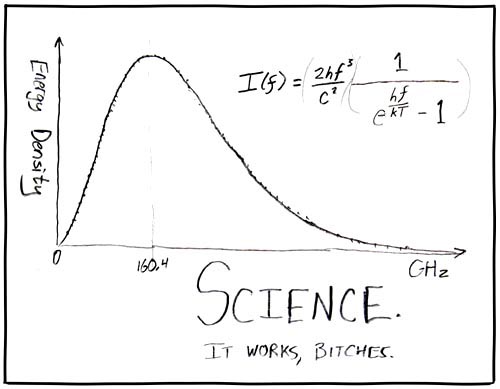
Early on in my wine drinking career, I was convinced that the evaluation of wine could be completely objective. I brandished Robert Parker's 100-point system like a golden cross. My good friend Liz argued vehemently that the evaluation of wine is completely subjective, and can't be reduced to anything as mathematical and clinical as scores. As I learned more about wine I realized she was partly right - it is impossible to remove the subjective element from wine tasting. On the other hand, there is objectivity to be found, as shown by the following diagram:
So, Liz, I'm not insane after all... at least not completely!
... Read more.

Monday, August 11, 2008
What is a winemaker?
As the singular vintner-rebel Sean Thackrey is fond of pointing out, there is no word in the French language for "winemaker." The word used instead, vigneron, means "wine-grower", but it connotes vinification as well (Rosenthal, memoirs). Paul Draper, the wine-maker/philosopher in charge of Ridge, asserts that wine is "grown, not made." Who, then, is a wine-maker?
Perhaps, he (or she) is one who through a quixotic mixture of love and harsh upbringing, coaxes the subtleties of terroir out of his grapes. His duty during vinification is to quite simply get out of nature's way.
Perhaps he is one who imposes his own personality on the grapes, resulting in a duel, or a duet of vintner vs. nature. His wines always have a bit of himself in them.
Perhaps he is a skilled artisan, removing all flaws, then standing aside to let Nature take care of the rest. His wine is different from year to year, as nature is different from year to year.
Perhaps he is a slave to the vine, giving up long hours for the opportunity to drink some of his own wine with good friends.
Perhaps he is a visionary, seeking to change the world of vinification. He knows where winemaking comes from, and wants to take it to a new place.
The few winemakers I've met were humble and extremely friendly. They value the growing of good grapes above all, and love to share their great works with friends. I hope to meet many more over the course of my life, and perhaps I will come closer to an answer in the future. At present, I have none.
... Read more.
Monday, July 28, 2008
Working for Paul Romero: Part 2
 On Saturday I worked at the newly-planted Sesson Vineyard (Santa Clara Valley AVA), with Paul's vineyard construction manager, Millie. An electrician by trade, Millie is as practical and tough as the irrigation lines she showed me how to string. As we were stringing the beginnings of a 5-wire trellis, and attaching black drip-lines to the lowest wire, she waxed eloquent about the clay soil, irrigation, killing gophers, and canopy management, occasionally pausing for a puff on a cigarrette.
A bit past noon, we ran out of plastic ties - time for a Home Depot run! We got into her boxy black jeep ("A bit rough, but it gets the job done - like me!") and I recieved an impromptu seminar on the art of growing good grapes.
Growing mediocre grapes is easy, but to grow grapes with any semblance of flavor concentration means severely slashing yields, taking only the primary fruit, reducing the tonnage per acre. It's not the most intuitive business model. "You gotta be crazy to grow good grapes" she said, "and if you grow bad grapes, people know - you taste the grapes and you just know. There's no hiding." How much do good grapes cost in Santa Clara? A couple grand per ton. In Napa/Sonoma? You can pay $5k and get crap.
On our way back from Home Depot, we stopped by Sycamore Creek so I could see what head-trained vines looked like. They instantly called to mind photographs I'd seen of Graves, in Bordeaux - lonely looking, beautifully gnarled trees, like bonsai in a desert. Clearly well-cared for, pristine.
We tasted through their releases and I noted that all the wines had great balance and acidity. The pinot was light, flavorful, and earthy. The other reds were quite dry, and not overly alcoholic. All across the board, each wine had several different flavors that it communicated with clarity. They were enjoyable and interesting to taste through, and I wish I'd had more time there to really write down complete impressions.
Afterwards we checked out Uvas Creek vineyards - the best grapes in town, according to Millie. Bill is a dirt farmer, so he keeps his rows clean and tilled. As a result he has to do more pruning work than most to keep the vigor down. The vertically trained vines were simply gorgeous - every leaf seemed in its proper place, and the view down each long, perfect row was stunning. Sensing my awe, Millie commented "Bill himself is in the vineyards every day - he checks every grape and removes the bad ones" - sure enough, we met him on our way out.
Bill Holt seemed to me the iconic image of a California farmer - Large-framed, a simple straw hat shading a sun-creased face, with a grizzled white beard, an easy smile, and a bone-crushing handshake. He wore an impeccable collared shirt, sleeves rolled, and at the same time had the vineyard's dark clay soil under his fingernails. He spoke slowly, wryly, his imagery incredibly old-fashioned ("that juice from the petite verdot was black as your hair!"). And at the same time he spoke of complex lab tests, chromatography results- modern ways of quantifying flavor ripeness that, he made clear, are only to be used in conjunction with tasting the berries. Millie amicably berated him for not having enough grapes to give to Paul this vintage.
If there's one thing I learned today, it is that Paul Draper is right - wine is grown, not made. The French term for winemaker is vigneron, which means literally "one who grows vines." Great wine is made in the field, one berry at a time, and then the vintner tries not to mess it up during vinification.
Here are my specific notes:
Vigor:
The idea of reducing vigor is fundamental to winemaking. For example, hillside vineyards are prized because they add stress to the grapes by retaining less water, decreasing the vigor. Pruning to decrease vigor is crucial. Dropping fruit is crucial to reduce production - usually you only want the primary fruit. As I understand it, vigor refers to vine growth/shooting laterals, and production refers to grape growth. Old vines produce small quantities of small berries - low vigor and low production which leads to high flavor concentration.
Irrigation:
The vines at Sesson had been newly plante (grafted?) a few months ago. We strung a wire low across each row, and then fastened the irrigation pipe to the wire with plastic ties. Millie thinks the owners made a mistake with irrigation as all the 20-odd rows are fed by one line. They should have run a separate line for every three rows, from the main water source. From a fluid mechanics point of view, I think they will have severe trouble with pressure drop at the end of the field. Irrigation, however, is not in Paul's/Millie's job description.
Watering:
Over-watering causes lots of fruit production, with big, watery grapes, and lots of vigor ("the grapes look woolly"). A telltale sign is an abnormally large distance (maybe a foot instead of 4 inches) between laterals. After the Sesson vines are mature and grape-producing, they'll rarely be watered at all - instead, their roots should go deep enough to access the water table. Since Sesson is on agri-designated land, they'll get lots of cheap water that they can then use to water their lawn/garden, since the vines eventually won't need it.
Rabbits/deer:
Sesson is too exposed for rabbits - the birds of prey will eat them. When the vines are bigger, the rabbits will have shelter from eagles/hawks, but by then the trunks will be so thick that the rabbits will only be able to eat the suckers - which actually saves work. Deer don't seem to be a problem in this particular area, but there are many ways of dealing with them - fences, strong-smelling wards, etc.
Gophers:
Gophers tunnel around and poke holes up for air. They eat roots, killing the vines. One way to combat them is to poke around with a re-bar until you find the tunnel (the bar sinks easily into the ground), dig up the tunnel system and put poison there, covering the hole with a brick. The gopher will try to re-dig the airhole, and in doing so will eat the poison. This is not a good idea if you have cats/dogs, as they could eat the poisoned gopher. Alternatively, you can trap it - but this is only possible if you are around the vineyard often, as you need to kill the gopher once trapped. The simplest method is to find a hole and flood it out, then hit it on the head with a shovel.
Canopy management:
In vertical training, the main stem splits into two laterals that go along the lowest trellis wire (above the irrigation wire). These produce the "primary fruit." At each junction on these laterals, 2 vines shoot upwards, bearing secondary fruit, which should be dropped. These secondary laterals are used just for photosynthesis and shade control. The region between the second and third wires above the ground is called the "fruit zone." For ease in tucking, the upper wires can be slackened until the vines grow well past the fruit zone, then tightened, saving time and effort in tucking stray shoots.
In head training, the main stem splits into several secondary stems, growing upwards like a small tree against a single vertical trellis. Until the main stem is sturdy enough to support the whole plant, a single vertical post is used as a trellis, and the secondary stems are tied to the top of the post. This is known as "basket training." Head training is more work than vertical training, and requires careful pruning. It is said to be good for Zinfandel, as it keeps the vigor/production down - the plant naturally scales back production to avoid collapsing from excess fruit. Head training is widely used in the Rhone valley.
We stopped by Sycamore Creek so I could see what head-trained vines looked like - they instantly reminded me of some photographs I'd seen of Graves - lonely looking, beautifully gnarled trees, like bonsai in a desert. Clearly well-cared for, pristine. The earth at Sycamore creek was light brown and dusty/crumbly. Not black and hard like the clay at sesson. Chaine d'Or seemed to have similar earth. The vineyard topography was flat.
In both types of training, a delicate balance must be found. Leaving too few leaves limits the nutrients to the grapes, and hence the flavor development suffers. Leaving too many leaves can make the bunches susceptible to mildew, as they don't get enough sun and air.
Weeds:
There are two schools of thought: Bill Holt, of the dirt farmer mentality, tills the ground in between the vines. He has to work extra hard to keep down the vigor. Millie and Paul believe in letting some weeds and some specially chosen ground cover aid in keeping the vigor low.
Grape pricing in different AVA's:
Santa Clara Valley AVA grapes go for a couple thousand dollars per ton. Santa Cruz would be a thousand more, perhaps $3500. Napa/Sonoma goes around $5000 at the low end, and they might not even be good, you have to taste them and find out how the vines were cared for.
Meeting Bill:
Bill Holt grows the best grapes in town, according to Millie. Paul made a very successful cabernet from Uvas Creek in '05, but didn't get any grapes this year. Bill tastes his grapes but also sends them to a lab to measure anthocyanins, tannins, and other species to quantify ripeness. He also grows Petit Verdot, which seems to be in high demand recently. He said the anthocyanins (which are factors in color, flavor, and mouthfeel) were so high that the petite verdot grapes were almost black during press.
One of the wines I tasted at Sycamore Creek was an '05 Cab made from Bill's Uvas Creek grapes - the same harvest that Paul at Stefania used for his well-recieved '05 Uvas Creek Cabernet, though Paul used 50:50 Clone 4 and Clone 337, and Sycamore Creek used 100% Clone 4. In the mouth the wine was light, yet intense in flavor, with a medium-soft tannic grip that was very smooth, even plush in texture. There was a little earth on the nose, with good fruit and hints of tobacco. The balance and acidity were excellent. I don't know how representative this winery is of the area, but I liked the wines a lot. They were not too fruit-forward, sweet, and oaky, which Millie says can be a problem in Napa wines. I can't wait to try Paul's wine from the same grapes!
... Read more.
Subscribe to:
Posts (Atom)

